Wednesday, October 24, 2012

Bunker Hill Military Academy


Among the institutions which Bunker Hill once boasted was the Military Academy (in the very early days called the Seminary) and stood on grounds, which is today the American Legion Park.  It opened in 1859.

Its history dates back to December 22, 1857.  On that date, a meeting was held "to take measures looking forward to the establishment of an academic school."  E. Harlan was chairman and W. Hutchinson was secretary.  The following committee was appointed: A. Ellet, P. Huggins, J. Weller, T. Van Dorn.  On the building committee was E. Howell, G. Mack, G. Parmenter, J. Delano, and E. Davis.  Later, Dr. Delano withdrew and H. Hopper was substituted.  On January 26, a constitution was adopted.  The amount of capital stock was fixed at $25,000.  P. Huggins offered to donate a four-acre lot for the building.

The building was brick, three stories high, and considered substantial in every way.  In its original state, it had three rooms on the first floor, five on the second, and the third floor was a large hall.  It was said to have cost about $19,000.

At the first call for volunteers in the Civil War, Professor Smith and 39 of the pupils entered the army.  Others soon followed and it became necessary to close the school.  The building was then loaned to the school district and used a public school for several years, or until the new public school was opened in 1869.


Samuel Stiver became the owner and proprietor of the academy in 1887.  Under his guidance, the institution attracted many young men from other states as well as several foreign countries, who for the most part, lived on the grounds.  Many Bunker Hill young men and women also attended the school.  Much of the success was attributed to a well-organized advertising program.


Cadets at the academy also engaged in the popular sports of the time including baseball, football, gymnastics, tennis and track.  They also had drills and competition in handling of firearms.

Mr. Stiver passed away in 1910 and the academy was taken over by Mr. Marburger.  After failure to operate the school successfully as far as finances were concerned, it was decided to close the school in 1913.

After being threatened with foreclosure, the association decided to sell the property at auction.  James Jencks purchased the academy grounds, the H. Meyer property, T. Mulligan's, and the ballpark ground on October 18, 1916.  He sold some of the buildings and finally tore down the main building.

Jencks later sold the grounds to the Civic League of Bunker Hill and they built a park there, which they maintained until 1948, when all the buildings were destroyed by the tornado.  The grounds were then taken over they the American Legion and they maintain a park there.


...Read more about this and other Bunker Hill, IL historical stories at https://bunkerhillhistory.org/

--Cite this story: The Bunker Hill IL Historical Society. "A Look Back in Bunker Hill History." Bunker Hill Gazette-News, October 24, 2012.

Thursday, October 18, 2012

Jacoby Brothers


On October 23, 1883, Casper J. Jacoby moved to Bunker Hill and embarked in the furniture and undertaking business, several years later adding carpets, wallpaper, pianos, organs, and sewing machines, a business which was destined to grow until it established for him a reputation known and respected throughout the surrounding country.  Starting with little capital and practically a stranger, young Jacoby, by that honesty and fair dealing which has always characterized the business methods of the firm, soon established himself as a successful businessman.


In March of 1891, Casper, in order to get suitable employment for the two younger brothers, William C. and Louis C., founded a corporation name of Jacoby Brothers.  The corporation consisted of Phillip W., Henry C., Casper J., and William C. Jacoby.  Rev. Phillip W. Jacoby, the oldest brother, died in St. Louis in 1899.

On April 10, 1899, Casper J. purchased the furniture and undertaking business of Bauer & Co., and August Miller, located in Alton.  Business then conducted in Alton was carried on under the name of C. J. Jacoby & Co.   On Casper J.'s removal to Alton, he sold the Bunker Hill store to Jacoby Bros., Jerseyville, as a branch of same and William C. was made manager of the Bunker Hill store and Louis C., the manager of the Jerseyville store.


The Bunker Hill store was erected in 1893, and was destroyed by fire March 15, 1899, but was rebuilt at once.  The building was 30x100 feet, two story, and basement, with a total floor space of 9,000 feet.  The store was located on the east side of Washington Street.

 ...Read more about this and other Bunker Hill, IL historical stories at https://bunkerhillhistory.org/

--Cite this story: The Bunker Hill IL Historical Society. "A Look Back in Bunker Hill History." Bunker Hill Gazette-News, October 18, 2012.

Thursday, October 11, 2012

Rigby Horse RaceTrack


Mr. Thomas S. Rigsby came to Bunker Hill after he served in the Civil War.  He began his business as a dealer in and trainer of horses.  On the outskirts of the city were large barns and a half mile race track.  This track was supposed to be one of the best in the State of Illinois.

From all over Illinois, he received horses which he trained to race.  Many of these horses won premiums at fairs in Illinois and Missouri.

Gazette News June 25, 1885: A trotting match is to take place on the Davis Track next Saturday for a purse of $50.  The entries are: Jencks' "Pacer Boy" and Rigsby's "Jesse James."

Gazette News July 10, 1889: Among the horses entered in the Fourth of July trot at Alton was "Billy Logan" entered and driven by its trainer, Tom Rigby, of Bunker Hill.

Gazette News January 8, 1890: Thomas Rigby has bought from D. E. Pettingill the 20-acre tract west of the Nutter place, and will convert it into one of the best speeding tracks of its size which can be found in the state.

Gazette News August 6, 1890: Encouraged by the success of a fort-night age, our local horsemen have announced a series of trotting and running races on the really excellent Rigsby track west of town on Saturday next.

...Read more about this and other Bunker Hill, IL historical stories at https://bunkerhillhistory.org/

--Cite this story: The Bunker Hill IL Historical Society. "A Look Back in Bunker Hill History." Bunker Hill Gazette-News, October 11, 2012.

Thursday, October 4, 2012

The Old Huber Opera House

Photo: Huber Opera House
    Andrew Huber had the grand opening of his Clothier and Dry Good Store on Saturday, November 11, 1882 in the Huber Opera House.  He carried clothing, boots and shoes, groceries, glassware, carpet, and many other items.

Pictured: Huber Opera House Advertisement

    As early as 1891, the Bunker hill High School graduation exercises were held there and continued on through the 1930's.

    In 1921, William Fahrenkrog bought the Huber Opera House and renamed it to the Bunker Hill Opera House.  It was remodeled and used as a movie theater, being called the Lincoln Theater.  Upstairs was a gymnasium and it was called Lincoln Hall.  Helen (Fahrenkrog) Teakert played the piano for the Lincoln Theater.  There were other businesses in the Opera House such as a drug store, pool hall, barber shop, and a jewelry store.

    During the 1948 tornado, the second story was blown off.  This building was occupied by Behrens Drug Store for many years.  Today it is the home of Thru a Lens Photography.
Photo: March 19, 1948 Tornado damage.

 ...Read more about this and other Bunker Hill, IL historical stories at https://bunkerhillhistory.org/

--Cite this story: The Bunker Hill IL Historical Society. "A Look Back in Bunker Hill History." Bunker Hill Gazette-News, October 4, 2012.

Thursday, September 27, 2012

Lighting from Lamplighters to Electricity


Photo: Bunker Hill Electric Light Plant, west side of Putnam at Morgan St.

Twenty-five street lamps were purchased in October of 1876.  The first Bunker Hill lamplighter was Thomas Larmer, who was awarded the contract to light and take care of the lights at 70 cents a lamp.  Eddie Carroll was a lamplighter at one time, and John Brandenburger was lighting and caring for street lights in September of 1879.  The lights were on posts and the lamplighter carried a short ladder with him as he made his rounds to light the lamps.  At 11 p.m. each evening he went around again, climbing up the ladder and blowing out each light.

On January 6, 1892, the City Council met to hear an electric light agent talk about installing a lighting system for Bunker Hill.  They discussed the possibility of the city purchasing a light plant or of drawing up a lighting contract with a company.  The system was to be purchased and controlled by the City Council at an estimated cost of about $12, 000 to $15,000.

The business portion of the city was to be lit by electricity by August 19, 1896.  The work was to be done by the Bunker Hill Foundry and Machine Works, under the direction of Mr. John R. Richards.

During the last week of September 1896, the incandescent lamps for the subscribing business houses arrived.  The night the lights were turned on throughout the entire circuit, giving the places illumined a handsome appearance.

An election was held in June of 1898 for the issuing of $7,000 in bonds for the building and operating of an electric light plant to be operated by the city.  The issue carried by a small majority of 116 to 92.  By November 29, 1898, the new electric light plant was ready and the lights were lit at 5 o'clock.  Bunker Hill was now illuminated every night!


By January 1899, the work of stringing the wires for lighting the residences was progressing as rapidly as the weather would permit and it was expected that by the first of the month those who desired to have their homes lit by electricity would have it.  Four hundred lights were estimated to be put in residences in 1899.  It was the cheapest and most convenient light a person could have in his home at the time.  After February 1st, the plant was to run the incandescent current all night.  There was no electricity at night before this time because the plant did not run at night.

The plant was located on Morgan Street on the west side of Putnam street junction behind Baker's feed store.  Ed Marth was the engineer at the electric plant.  Abbie Landon's father, George, was a fireman and Abbie's uncle cleaned ashes out of the boiler room.  A large concrete pond behind the plant supplied water to the steam boiler and generators.   If any malfunction occurred in the system due to lightning, ice on lines, or other causes, the system was maintained by Bill Baker, a local electrical lineman and electrician.  When a large transformer near the plant was blown out by lightning, Bill Baker could be seen in raincoat and boots fixing the transformer.  Many improvements were made as the years progressed.

On January 10, 1952, the Bunker Hill City Council voted unanimously in favor of installing a new street lighting system in the uptown business area.  The proposal was presented by the Illinois Power Company in conjunction with General Electric Company.  The system would provide white incandescent lights with steel, concrete or wooden poles (whichever was available) to be installed to hold the lights.  On streets feeding into the main stem, wooden poles would be used.  

The city street lighting committee placed an order for 46 new street lights on Tuesday, January 24, to be installed in the uptown area by the IPC.  the power company was to secure all materials for the project and would own and maintain the system after installation.  The city was to be billed monthly for the lights.

In order to extend the project considerably from the original plans, a number of lights were paid for by churches and other institutions. The Congregational, Methodist, Lutheran, and Baptist churches each paid for one light, the school paid for two lights, and the Bunker Hll Vault and Monument Works, the First National Bank, and the Commercial Club each took responsibility for one.  With these organizations standing the cost of extra lights, the system expanded considerably from the 28 considered in the original plans.

The lights were to extend on Washington Street from Fensterman's Garage to the Condensary corner.  On Warren street, the light extended east to the Lutheran Church and three lights on West Warren; and on Fayette Street east to the Masonic Temple and three lights on West Fayette.  There were two additional lights on the street past the Baptist Church and two on the north and south street past the Congregational Church.

...Read more about this and other Bunker Hill, IL historical stories at https://bunkerhillhistory.org/

--Cite this story:  Redford, Carol, and Betty Triplett. "City Growth." In Reflections: A History of the Bunker Hill-Woodburn Area, 23-24. Bunker Hill: Bunker Hill Publications, 1993. Provided by the Bunker Hill IL Historical Society.

The Bunker Hill IL Historical Society. "A Look Back in Bunker Hill History." Bunker Hill Gazette-News, September 27, 2012.

Thursday, September 20, 2012

A Railroad Train to Bunker Hill


A major influence on the growth of Bunker Hill was the decision to run the railroad through Bunker Hill.  In 1851, ten years before the outbreak of the Civil war, the only mode of transportation in Bunker Hill was by stage coach, wagon, or horse over poorly constructed roads.


In the winter of 1852 and the year of 1853, the first work was done on the new railroad.  The railroad was completed in 1854 and the first train came up from Alton loaded with steel rails and ties for the railroad.  They call the first train the Tiger, and described it as resembling a threshing machine engine with the smoke stack on the back of the engine.


Photo: Lee and Arthur Sutton - Mail Clerks
 
 The first passenger train came through Bunker Hill in August 1855, bringing the officials of the railroad company along.  The decision to run the Indianapolis and St. Louis Railroad through this city made the difference between Woodburn and Bunker Hill, as it brought growth and prosperity to Bunker Hill, while Woodburn remained much in its original condition.  The bringing in of new industry, modern improvements in housing facilities and  an easy means of transportation and travel was the cause of our city growing to be one of the largest towns in the county during the first 50 years of progress.


 One hundred and forty-five years ago trains were not only the source of travel, but of news as well.  Who arrived and departed from the local depot made news, and the local editor made it a point to be at the depot at train time.  the train time of the St. Louis, Alton, and Terre Haute Railroad was listed in the first issue of the Gazette, January 19, 1866.


From the Gazette News October 12, 1900: A goodly number of people came to town last Monday evening in response to advertising that Governor Theodore Roosevelt of New York, a Republican candidate for Vice President of the United Stated, would be in Bunker Hill that evening.  the largest number present at the depot was 450 to 500.

...Read more about this and other Bunker Hill, IL historical stories at https://bunkerhillhistory.org/

--Cite this story: The Bunker Hill IL Historical Society. "A Look Back in Bunker Hill History." Bunker Hill Gazette-News, September 20, 2012.

Thursday, September 13, 2012

The Bunker Hill Bandstand


Photo: Bunker Hill's Bandstand

This is a picture of the bandstand which stood in Bunker Hill where the flagpole now stands at the intersection of Warren and Washington Streets.  The Bunker Hill Museum has the bronze plaque which says it was donated by Mr. and Mrs. C. J. Jacoby in 1923.  The bandstand was destroyed by the 1948 tornado.  An April 28, 1955, the present Memorial Flag Pole was installed at the intersection.


Photo: The bandstand after the 1948 tornado


...Read more about this and other Bunker Hill, IL historical stories at https://bunkerhillhistory.org/
 
 --Cite this story: The Bunker Hill IL Historical Society. "A Look Back in Bunker Hill History." Bunker Hill Gazette-News, September 13, 2012.

Thursday, September 6, 2012

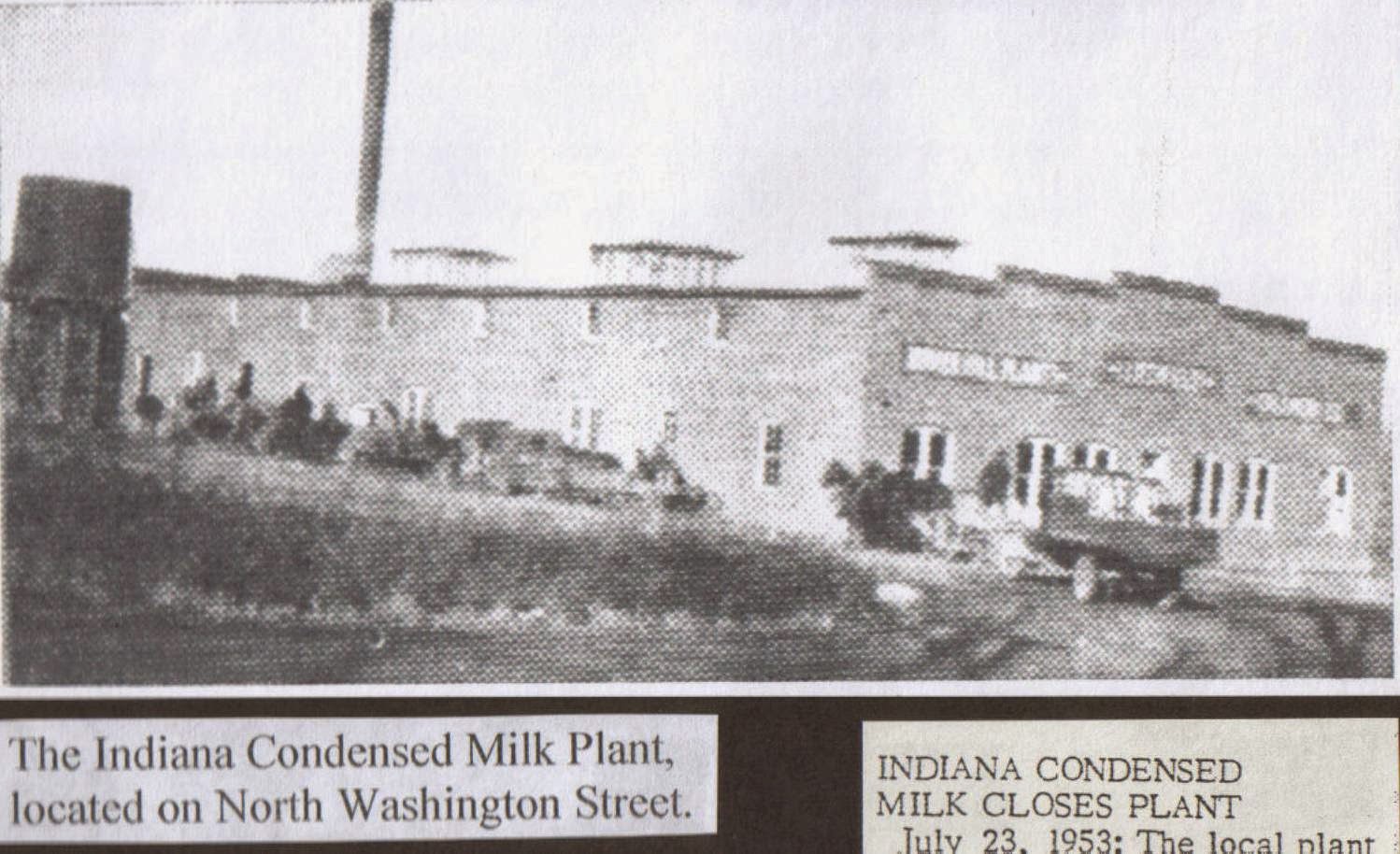
The Indiana Condensed Milk Company


Photo: The Indiana Condensed Milk Company

The Indiana Condensed Milk Company of Indianapolis, IN, purchased the Bunker Hill Condensing company in March 1924.  Bunker Hill was Plant No. 6 according to the sign on the building, which was on North Washington Street.  This is where the new duplex apartments are located now.  Benezette N. Wilson, whose father and uncle founded the company, was the manager of the Bunker Hill plant for a number of years.

Arthur "Babe" Welch began working at the Condensery for thirty cents an hour in 1933 and worked there until 1952.  John Heuer began working there in 1937 and was there when it closed in 1953.


During the spring of the year, some 100,000 pounds of milk a day was received.  Long lines of wagons and trucks were on the highway waiting to unload.  Farmers took turns taking their milk and their neighbor's milk to town .  During this busy time, the Condensery operated seven days a week.


After going through several stages, the evaporated milk was canned and the royal blue label, Wilson Evaporated Milk, was attached.  It was packed 48 cans to a case and loaded on freight cars.  If a chain of stores ordered the evaporated milk, their label would be put on the can in place of the Wilson label.


The water used in the plant was piped across town from the dammed up portion of the creek on the northeast part of town.  The waste was dumped back into the creek on the southeast part of town.  This caused quite an odor.

During World War II, the plant was under military supervision.  The milk was put in khaki colored cans and sent to the troops.  A Corporal did duty here and once a month, and an inspector from the Army would come also for inspection.

A lot of women worked during the war because of the shortage of men.  Some of the work was hard and hot, especially when freight cars of coal had to be unloaded in the summer.  Men were paid bonuses to unload coal cars after working hours.  The supply of cans from railroad cars was unloaded into the second story by the women, which also was a very hot job.


Newspaper Article - Feb. 6, 1931

February 6, 1931: Three members of the Commercial Club of Bunker Hill would confer with officials of the Indiana Condensed Milk Co. of Indianapolis on the closing of its "condensery".  The members were club President Carl Williams, Charles E. Drew and R. H. Hayes.  The trio would make every effort to keep it from closing.  The local operation had 25 employees.


Newspaper Article: July 23, 1953 - Indiana Condensed Milk Closes Plant
July 23, 1953: The local plant of the Indiana Condensed Milk Company will cease operations here on August 1, according to a notice to all employees and patrons which was posted this (Thursday) morning at the plant.  The notice reads as follows: After several years of a low milk supply at Bunker Hill, we reached a conclusion the fore part of this month that there is not now and is not likely to be in the future a milk supply adequate to permit the efficient operation of an Evaporated Milk Plant at this location...

...Twenty three men are presently employed by the Indiana Condensed Milk Company since 1924.  Most of the men are long time employees average being 48 with only four men being under 40.


...Read more about this and other Bunker Hill, IL historical stories at https://bunkerhillhistory.org/

--Cite this story: The Bunker Hill IL Historical Society. "A Look Back in Bunker Hill History." Bunker Hill Gazette-News, September 6, 2012. 

Redford, Carol, and Betty Triplett. "Bunker Hill History." In Reflections: A History of the Bunker Hill-Woodburn Area, p. 136. Bunker Hill: Bunker Hill Publications, 1993. Provided by the Bunker Hill Historical Society.

--Provided by The Bunker Hill Historical Society


Thursday, August 30, 2012

Lincoln's Statue


Photo: Present day Lincoln Statue - Bunker Hill IL

    In the center of the intersection of Washington and Fayette Streets in Bunker Hill stands a statue of Abraham Lincoln, a gift to the city by Civil War commander Captain Charles Clinton, as a token of appreciation to the Bunker Hill men who served in his company during the war.

    The unit was Company B of the First Missouri Volunteer Calvary, which was raised by Captain Clinton of St. Louis and was comprised of men from Illinois, Missouri, and other states.  Company B was organized at Jefferson Barracks August 1, 1861.

    After the war, Captain Clinton had high regard for Bunker Hill and became friends with Mrs. Moses True, widow of the founder of Bunker Hill.  He indicated to her his desire to do something for the men who had been in his command, and the statue of Lincoln was decided upon.


 Photo: Captain Charles Clinton

    The cost for the base of the statue was raised by local subscription.  the bronze casting of Lincoln was shipped from Philadelphia and the granite for the lower part was shipped from Vermont.  The Lincoln statue was sculpted by William Grandville Hastings, and English artist, who died in 1902 at the age of 34, before any of his statues were mounted.  Captain Clinton collaborated with the artist in designing the monument.


Photo: Bunker Hill's newly donated Lincoln Monument (circa 1904)

    Captain Clinton donated a similar statue, complete with the kneeling "Liberty" to the city of Cincinnati, Ohio.  Two other castings of the sculpture were cast.  Neither have the kneeling "Liberty".  One is located in Jefferson, Iowa, and the fourth is in Sioux City, Iowa.  These were donated by persons other than Captain Clinton.

    The statue was unveiled September 7, 1904.  A plaque mounted on the statue has inscribed:

1904
In Ever Lasting Memory of
the Conflict by Which the Union
In Which they
Took Part This Statue of
Abraham Lincoln
was presented
To the Citizens of Bunker Hill
By the Soldiers of Company B
of the
First Missouri Calvary,
Charles Clinton


Photo: Postcard photo of the Lincoln Statue (postmarked June 15, 1908)


Photo: Postcard photo of the Lincoln Statue (postmarked July 14, 1909)

...Read more about this and other Bunker Hill, IL historical stories at https://bunkerhillhistory.org/
 
 --Cite this story: The Bunker Hill IL Historical Society. "A Look Back in Bunker Hill History." Bunker Hill Gazette-News, August 30, 2012.

Thursday, August 23, 2012

The Bunker Hill Soldier's Monument


The Soldier's Monument
On November 11, 1865, the preliminary steps were taken for a soldier's monument to be placed in the cemetery in Bunker Hill.

The soldier's monument was erected in 1866 and is dedicated to the memory of the brave men who lost their lives in the Civil War.  For many years, Memorial Day military tribute has been paid to veterans of all wars in ceremonies held at the base of the monument.

On three sides are the names of the men who died in the Civil War, the place where they died, and the cause of death.

The work of putting back the fallen monument after the tornado of 1948 was done by Floyd Spickerman, James Vaughn, and Malvern Allen.  A gin pole, blocks and tackle, and plenty of rope was employed to hoist the heavy stones.  Burlap sacks were placed under the ropes to keep them from being cut on the sharp corners of the stones.  The big pieces, which caused the men no little concern, was taken up in five hitches, using a tractor for power to pull the two blocks hitched to a sling on the stone.  

The monument suffered rather badly in the tornado.  The center section, bearing a coat of arms, was broken on one corner and the lower spire and foundation was also chipped and broken.  The eagle lost a large part of its tail and left wing in its flight to the ground.

The engraving on the monument is:
To the memory of
The brave men
Who died in the service of their Country
During the war
For the suppression of the slave holders'
Rebellion of 1861
This monument is erected
by their fellow citizens
1866


...Read more about this and other Bunker Hill, IL historical stories at https://bunkerhillhistory.org/

--Cite this story:  The Bunker Hill IL Historical Society. "A Look Back in Bunker Hill History." BUNKER HILL GAZETTE-NEWS, August 23, 2012, sec. 1. Republished 13 November 2014.

Thursday, August 16, 2012

The Bunker Hill Brick Plant


Pictured: The Bunker Hill Brick Plant

    The Bunker Hill Brick Plant stood on the ground on the south side of Alton Street adjoining Meehans Plaza and possible, some on the north side.  When the property was bought in 1987, There was still part of the old kiln in the basement.

  There is a brick in the basement wall with the date May 26, 1899 and the name John Herbst scratched into it.  A brick in the old carriage house is marked "built in 1910".  The patio is made out of six-inch square blocks, one having the date August 19, 1889.  There are several bricks with the Star of David imprinted on them.  One brick in the sidewalk has the initials J.H.

    The carriage house had room for the buggy on one side and the other side was a place for the horse.  These displayed bricks are all from the old Herbst Brick Factory location.   --Compliments of Charlotte Thyer

...Read this and other Bunker Hill, IL historical stories at https://bunkerhillhistory.org/

--Cite this story: The Bunker Hill IL Historical Society. "A Look Back in Bunker Hill History." Bunker Hill Gazette-News, August 16, 2012. 


Wednesday, August 10, 2011

The Soldiers Monument Rebuilding Project


Pictured: The various stages of rebuilding the Bunker Hill Soldiers Monument

From the Gazette-News: May 24, 1951    

    The four top pieces of the Soldiers Monument in the Bunker Hill Cemetery, which have laid half buried in the ground since they were toppled by the tornado in 1948, were put back into place Saturday.  Pictures above show the various stages of taking up the long upper spire, which was said to weigh nearly four tons.  The picture at the far right shows the monument complete with hovering eagle at top.

    The work of putting back fallen pieces was done by Floyd Spickerman, James Vaughn, and Malvern Allen.  A gin pole, blocks and tackle, and plenty of rope was employed to hoist up the heavy stones.  Burlap sacks were placed under the ropes to keep them from being cut on the sharp corners of the stones.  The big piece, which caused the men no little concern, was taken up in five hitches, using a tractor for power to pull the two blocks hitched to a sling on the stone.

    The monument suffered rather badly in the tornado.  The center section, bearing a coat of arms, was broken on one corner and the lower spire and foundation was also chipped and broken, as perhaps you can detect in the photos.  The eagle lost a large part of its tail and left wing in its unceremonious flight to the ground.  

Pictured: The Bunker Hill Soldiers Monument with Civil War Veterans

    The Soldiers Monument was erected in 1866 and is dedicated to the memory of the brave men who lost their lives in the Civil War.  For many years, Memorial Day memorial tribute has been paid to veterans of all wars in ceremonies held at the base of the monument.  No doubt, many people will be glad to see that the monument has been restored for Memorial Day services to be held next Wednesday.

Pictured: Sept. 27, 1901, Members of Hubbard Post No. 721 G.A.R.; Photographed in front of Jencks Livery Stable.
 Top Row (l-r): A.H. Bastian, Wm. Neil, W.W. Goodall, G.R. Sutton, P.J. Marks, E.W. Hayes, R. Wood, John Brandenberger, Samuel Smith, Joseph Ward, P. Wiegand (deceased), Jacob Scheldt, Peter Jacobi, Phillip Simmermaker, J.P. Dove, Henry Schoeneman, Fred Haman, George Morrison.
  Bottom Row (l-r): John C. Hayes, Fred Dabel, John B. McPherson, August Kardell, W.O. Jencks, John Gillies, Abraham Sherfy, E.S. Williams, Pete Thielen.


Pictured: Present Day Bunker Hill Soldiers Monument


...Read this and other Bunker Hill, IL historical stories at https://bunkerhillhistory.org/

--Cite this story: The Bunker Hill IL Historical Society. "A Look Back in Bunker Hill History." Bunker Hill Gazette-News, August 10, 2011.

Bunker Hill Gazette-News, May 24, 1951,